
Patented Protein Design
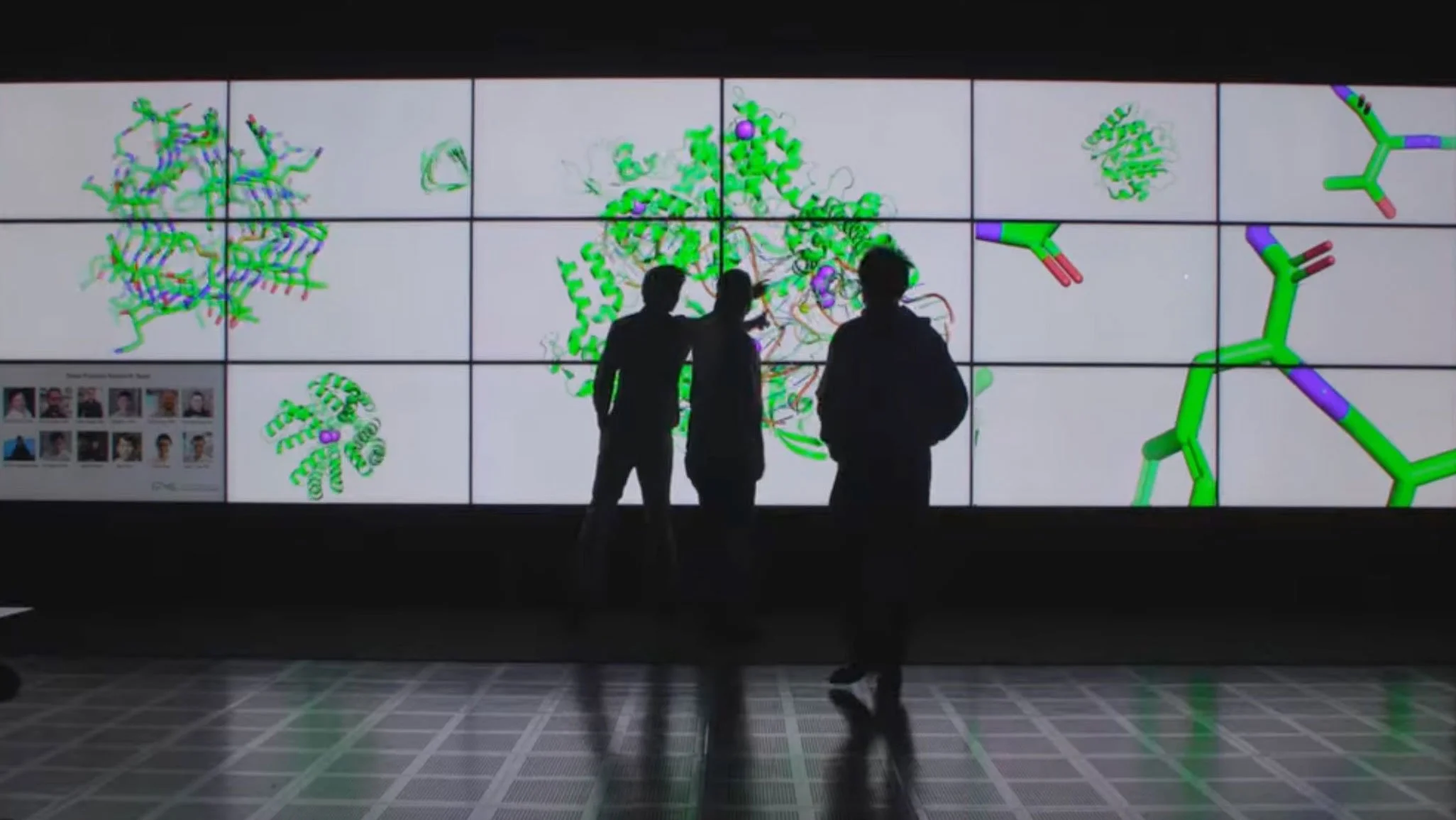
Credit: Danny Diaz
Finding new designs for medications involves years of trial and error in labs, but now artificial intelligence models developed at UT are helping scientists arrive at viable solutions much faster by eliminating guesswork.
The University already holds a half-dozen patents on proteins designed in part by AI for a wide range of applications, from eliminating plastic waste to creating compounds needed for Alzheimer’s drugs. One promising enzyme is currently in preclinical trials as a potential drug candidate for breast cancer, while a pair of new enzymes represents an advance toward developing more affordable mRNA-based treatments for disease, including cancer. These UT-patented proteins with designs informed by AI are showing results in the lab already, registering improvements more than fivefold or even tenfold beyond what’s possible with current drugs and technology.
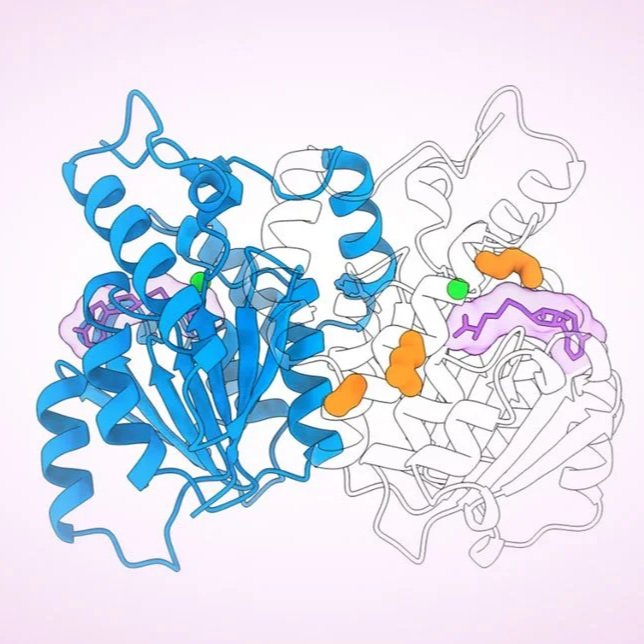
The University already holds a half-dozen patents on proteins designed in part by AI.
Danny Diaz, one of the leaders in a Deep Proteins computer science research group, said UT’s researchers have learned to be nimble and mathematically innovative, creating effective systems that deliver results at a fraction of the cost of what is more typical for industry counterparts.
“Here at UT, we don’t have $100 million available to train a single AI model, so we have to work smarter, not harder,” said Diaz, who received his Ph.D. in chemistry from UT. “We aim to develop practical AI technology with immediate real-world applications, and our patents help show that our team has a track record of success in applying AI in the development of protein-based biotechnology.”