Beachcombing Goes High Tech
Microplastics – tiny fibers, flakes and pellets – on beaches prove challenging to monitor. Since they release toxic chemicals into marine organisms and up the food chain into humans, the world needs scientists to rise to this challenge.
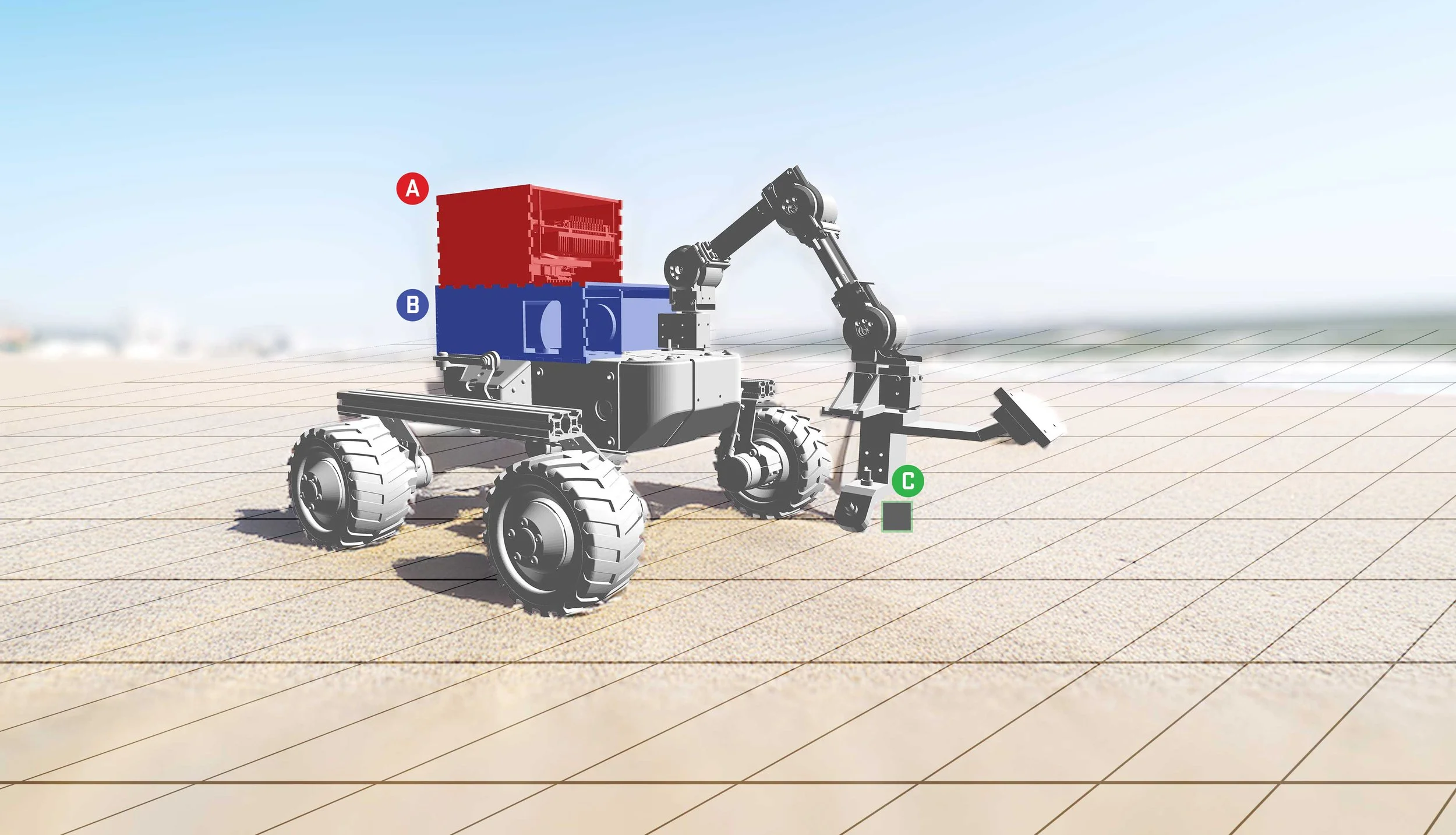
Carlos Baiz, a University of Texas at Austin professor of chemistry who co-leads one such monitoring project with other UT faculty members in engineering and in earth and planetary sciences, said these efforts are important for knowing what microplastics do to living things and the environment. The team is developing a toaster-sized autonomous robot that can rove along beaches mapping out where microplastics are and what they’re made of. The goal is to replace some of the time- and labor-intensive work of human monitoring, while addressing an emerging public health concern.
“I think microplastics are our generation’s asbestos or lead,” Baiz said. “We have good tests for lead and asbestos in the environment, but we don’t have a way to assess the levels of microplastics. So as chemists, we need to develop new analytical techniques.”
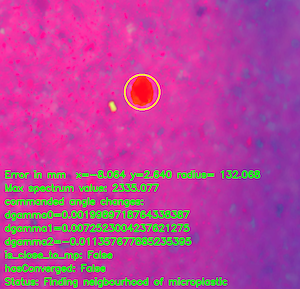
The rover first uses a high-resolution optical camera and an AI model to identify candidate microplastic particles. It then uses a near-infrared spectrometer to record the spectra for each candidate. Finally, leveraging machine learning, a classifying device analyzes each spectrum and determines whether it is plastic and if so, what type.
The robot is already 86% accurate for spectra collected from nine common plastics. Expanding the list of identifiable plastics and improving accuracy are next steps in a project poised to help a new generation of scientists keep toxic chemicals in check.
Learn how they’re planning to use the new rover on Texas beaches.
Credit: Christian Claudel & Hassan Iqbal