
Cut, Paste, Cure
By Marc Airhart. Illustrations by Zara Picken
A TECHNOLOGY WITH the power to transform life as we know it started with a discovery in something quite small. Biologists in Spain and Japan were studying microbes when they uncovered a weird, repeating pattern in the DNA of single-celled organisms. A defense mechanism within the bacteria imbued their immune systems with an ability ours lacks: to chop up genes from an invading virus and store pieces of viral code in their own genomes. The sequences of code served like mugshots to help bacteria recognize and fight off dangerous, invading viruses, and they read the same forwards or backwards, leading these tiny pieces of code in the tiniest organisms to have a very long name: Clustered Regularly Inter-Spaced Palindromic Repeats, or for short, CRISPR.
Scientists would later adapt CRISPR, which naturally occurs in microbes, to unlock a sophisticated new era of biomedical science. From it, they developed an entirely new way to edit the genomes of other living things: plants, animals and even humans. Biologists have started to use CRISPR to help cure dreaded diseases, adapt crops to hotter, drier conditions and decode the functions of millions of genes across the tree of life. And at The University of Texas at Austin specifically, scientists are helping hone these emerging gene-editing technologies and find new applications with the potential for widespread benefits in society.
The Revolution is Now
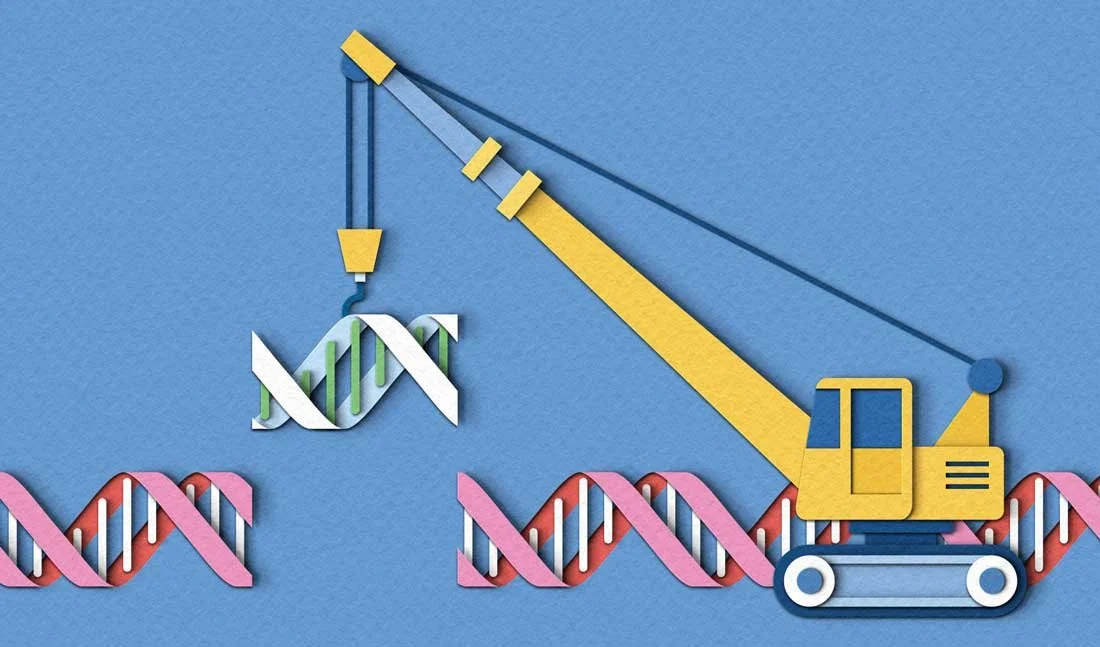
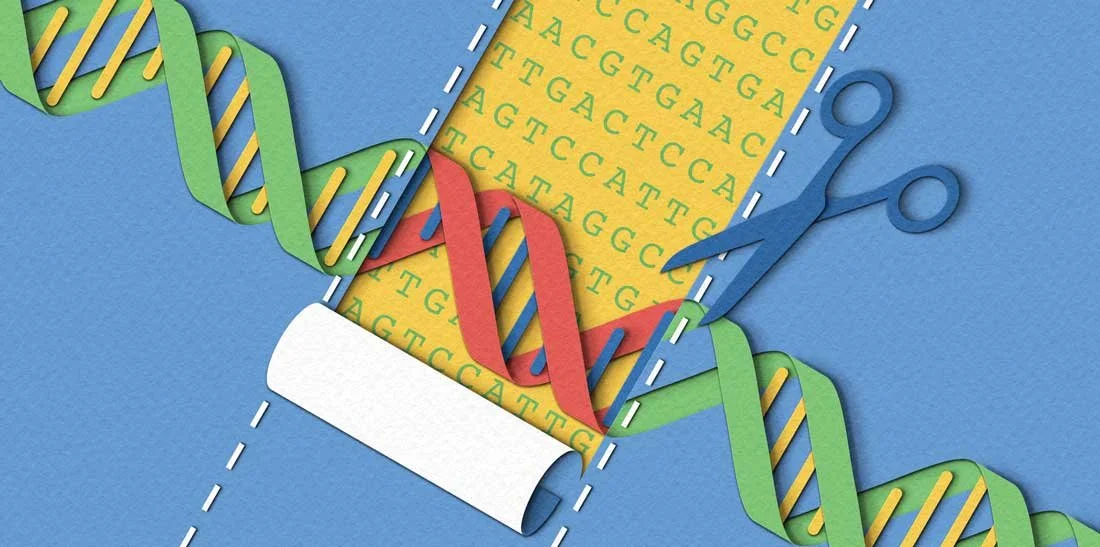
To cut viral DNA, the CRISPR system within microbes uses numbered enzymes called Cas that act like molecular scissors. Scientists can use Cas9 to cut isolated strands of DNA at a predetermined spot, then insert alternative DNA snippets where the cut happened. This innovation has led to a multibillion-dollar industry involving a whole new kind of genome editor.
“This technology almost immediately revolutionized the way people were doing basic science,” said David Taylor, a professor of molecular biosciences at UT, who was previously a postdoctoral researcher in the lab of a scientist who won the 2020 Nobel Prize in chemistry for her CRISPR research. Scientists once spent years building objects to target specific genes, Taylor observed. He likened the effort to making a new computer each time one wanted to log onto a different website. CRISPR, by contrast, offers simplicity on a par with downloading an app.
“Before, we had clunky ways to study genes,” he said. “With CRISPR, scientists suddenly had a tool to study any gene they wanted to target for any disease or process inside a cell. That’s what has made it such a game-changing technology.”
CRISPR-Cas9 is a surprisingly cheap editor that needs only a few days or weeks to set up and run, at least in simple organisms. Targeting specific cells, particularly in living animals, remains more challenging, but the technology has already produced mosquitos that don’t transmit malaria and fashioned chickens and mice that are impervious to certain genetic disorders. It has allowed pig organs to be adapted for transplant into humans, corrected a genetic version of blindness, helped edit patients’ own cells to treat sickle cell disease and found its way into a gene therapy, used last year for the first time to treat a living patient – thereby curing a 9-month-old baby of a rare, fatal genetic disease.
“This has been one of the fastest bench-to-bedside technologies ever,” marveled Ilya Finkelstein, another professor who studies CRISPR systems in UT’s Department of Molecular Biosciences.
“This has been one of the fastest bench-to-bedside technologies ever.”
The ability to disrupt a single gene helps scientists see how it affects the entire organism, much as changing a single word or phrase in a poem alters its entire effect. Since CRISPR came online, molecular biologists have built whole libraries to document the relationships between genes and what they do. Nonetheless, researchers say, CRISPR technologies’ full potential will be even greater when scientists learn more about the basic grammar of their new editor.
What Starts Here
One unresolved challenge: CRISPR-Cas9 only cuts; it does not paste, meaning biologists still struggle to insert any segment of DNA they want, wherever they want, in living cells. They also cannot readily alter more than one gene at a time, to treat complex diseases or meld different advantages. Fortunately, UT molecular biologists are leading the push to refine CRISPR-based gene editing and make the technology quicker, safer and more precise.
Finkelstein and other molecular biologists at UT are developing techniques that will advance precision engineering on genes. Earlier this decade, the team utilized resources from the Texas Advanced Computing Center to discover almost 1,500 previously unknown mobile sequences of DNA called transposons related to CRISPR. The findings hold enormous promise for controlling more than one gene at a time. Finkelstein followed that work by developing a sleeker method of editing several genes at a time, borrowing from retrons, other genetic sequences that help protect bacteria from infection. That may make this approach especially useful in treating diseases that can arise from a complex host of mutations, such as cystic fibrosis. Finkelstein’s efforts are key to developing systems that not only cut easily but also copy and paste.
When Cas enzymes snip DNA, they still can often miss their targets and clip where they shouldn’t. Taylor and fellow molecular biologist Kenneth Johnson have developed a novel version of Cas9, called SuperFi-Cas9. This enzyme is not only several thousand times more likely to target any desired strand of DNA without errors, but it also does so without sacrificing speed.
“We wanted to understand how an enzyme recognizes the sequence it targets versus a sequence that’s off by just one or two bases,” Taylor said, “because that difference can be life or death.”
His lab is now “getting Cas9 ready for prime time,” as he puts it, by shrinking versions of Cas9 to place inside viruses to target specific cells and insert beneficial genes directly into living patients.
“It really makes you feel like you’re making a difference with the research you’re doing, when you see the effects these basic ideas have and the therapies that are saving people. It’s incredible,” Taylor said.
Bright Future
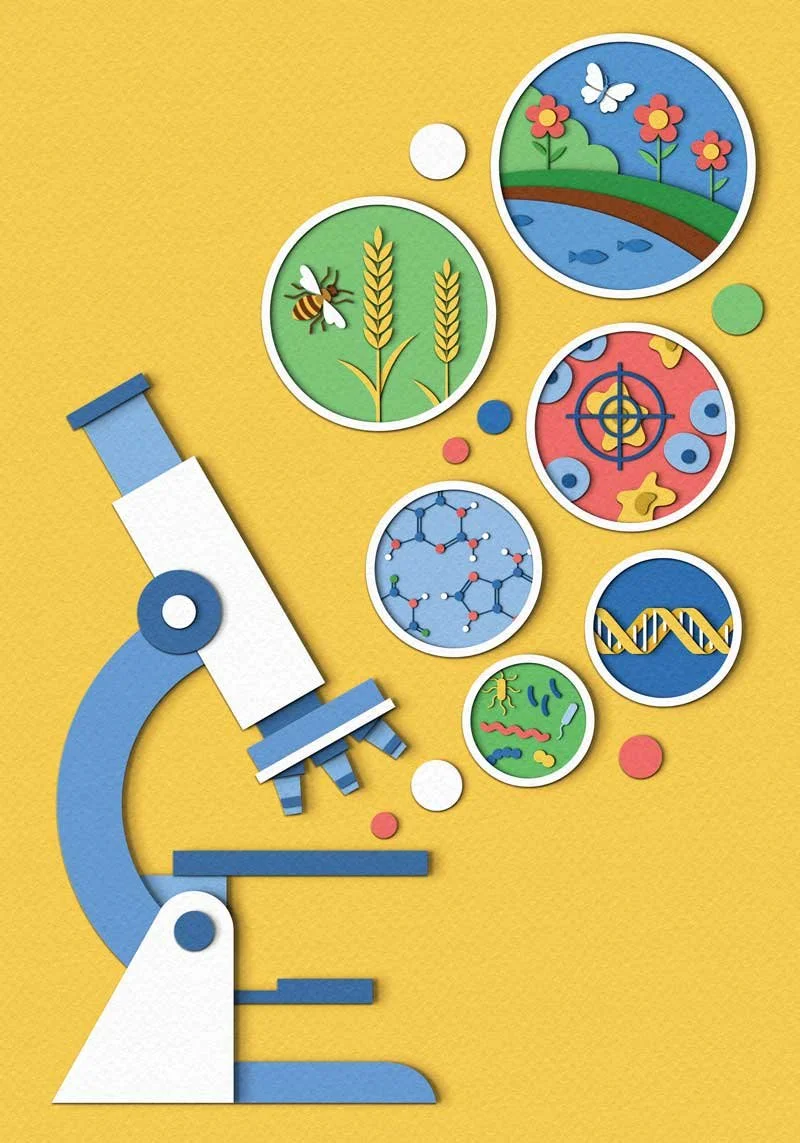
Other researchers at UT are applying the CRISPR gene editing on the market now for important advances. Nancy Moran and her colleagues in the Department of Integrative Biology have used it to engineer bacteria to protect honey bees from pests and pathogens. Ryan Gray, a professor of nutritional sciences, has used CRISPR with his team to witness how mutations cause the spines of zebrafish to curve, as in humans with scoliosis. Molecular biosciences professor Tanya Paull and her collaborators directed Cas9 to induce breaks in DNA on purpose to study how cancers start.
“If we understood how repairs work,” Paull said, “we could actually design something that will kill a certain set of tumors.”
Finkelstein, too, is investigating DNA repair, along with other uses of CRISPR for cancer research. He envisions killer immune cells, modified to find and destroy cancers without being rejected by a patient’s immune system. “If we can develop universal donor cells, I think we’re going to make cancer immunotherapy affordable for most Americans.”
Biologists would also like to engineer microbes that can break down plastic or produce energy sustainably, and they hope to apply CRISPR to making species more resilient in the face of environmental change. They hope to apply CRISPR in preserving genes at a cellular level to prevent aging. Some are even working to resurrect extinct animals or develop new fermentation processes to improve food- and beverage-making. Finkelstein believes further breakthroughs will enable the application of lessons from CRISPR to whole new endeavors in science.
“CRISPR didn’t evolve to cure humans,” he said. “It evolved to counteract viruses. We now understand enough about the rules of life to design better, built-for-purpose tools. We can take what we’ve learned from CRISPR and go beyond what nature designed. We can be inspired by nature, but create something completely new and functional, and more powerful.”